Author: gsdesign1

Random Thought- Is UX Design a Novelty? (hint: the answer is no)

For the past six weeks or so, I’ve been working as a contract UX Designer for a company in America’s Finest City (that’s San Diego to those who don’t live or work here…).

When I was hired on, I was the second UX guy they had ever really met. The first guy, a super nice, stand-up guy who had worked for Sony online, had spent the last two years championing UX, and trying to get them to bring in someone to help with the load of work, being that the projects they were working on needed good UX, and it shows now in projects he didn’t have time to invest design thought into – being the sole UX person and there being dozens of developers and numerous projects doesn’t help.

I should have listened when he said he’d been trying for two years to get them onboard with user experience.

To them, from what I can see, UX is a novelty.

So, I design wireframes, and the developers as well as the visual designer kind of follow them. The visual designer sits pretty close to me, so I can provide art direction, since having been a visual designer, I know what works. And being that I’m seen as a non-typical UX Designer (I do visual design vs. sending it out to someone else), I think the whole UX thing is an end-to-end process, or should be and the UX Designer should know how to use Illustrator and Photoshop, and know how to design for the overall experience.

As far as keeping an eye on the devs, well, it’s not so easy, as we’re on a real tight schedule, and I’m cranking out wireframes as fast as they need them, since there really is very little luxury of getting any done ahead of upcoming sprints (this place is learning about and trying to be an Agile environment). As of now, there’s about 30-40 wireframes to do, 10 devs, and one me.

Because they’re not used to having UX (which I said shows on earlier projects), they come up with what they call “Developer Innovations”, as well as ignore affordances I put in the wireframes for a reason. Changing radio buttons to a drop-down list may not seem like a huge deal, but it is, especially if they don’t ask, and then the wireframes don’t match the app, and QA asks which is the right one (answer, my wireframes..). Or why is there more than one way to navigate to a specific screen (answer, because the button that allows it on one screen isn’t going to be on all the screens, yet the user still needs to get there somehow..heavy sigh).

I’m hoping that someday, UX Design will become standard, both in big companies as well as small ones. Users need good (well actually GREAT ) design. And it would be nice to be listened to, instead of getting that look from co-workers like I’m some crazy Uncle with crazy ideas. I talk, and they smile and just nod…

Design – Taking the Complicated and Making it Simple

I love to find ways to make something simple out of something that can be so complicated when it comes to designing an app or product. I just have this innate feeling that no matter how complicated something can be functionally, for the end user that something should be the most simple approach to create a great experience.

There’s some great examples of very complicated products or devices we use everyday, that in the end are a very simple solution for the end-user. The iPhone, the iPod, the iPad, a toaster, a clock, a pen, a mouse – and so on.

Usually in software development, a business case is made along with requirements, and sometimes those requirements are very complicated. I tend to have some crazy idea pop in my head (really!), especially when put on the spot and there’s no real time to do research, or flesh things out, that almost all the time solves a complicated problem in a very simple way. It’s something I’ve done since I was very small (I’m now very tall..), and maybe it comes from approaching things from both a user perspective, and sometimes a child-like innocence as well.

So it dawned on me today during a conversation to use a leaf as an analogy for design from both the complicated to simple.

To the average person (the user let’s say) a leaf is nice looking, pretty, leafy.

When the seasons change, it changes color- still leafy and pretty to the passerby.

And that’s the simplicity of a leaf- at least to the user.

Now for the fun part…

Ever look at a leaf up close? Really up close? There is a LOT of coding going on in one of those little guys. Complicated coding.

First off, look at all the structure. Lots and lots of structure. There is no mistake in what’s going on in a leaf. Next, it converts carbon dioxide into breathable air. Nothing else does this as easily or efficiently. Who thought of this? (answer: God)  And the whole changing colors thing? WOW!  Millions of people flock to the east coast to watch the changing of the colors…

So next time you’re designing and developing an app or product, think of the leaf.


Random Thought – An interesting morning…

I have a Honda Rune. Google it.. really..just Google it.

When people ask what I ride – after they’ve seen me walk into work with my helmet, or see it at my desk, they ask “So, what do you ride”. I tell them, and either they say “Oh, nice” (they really don’t know what I’m talking about..), or look puzzled, and in either case I tell them to Google it.

At the bottom of this I’ll post a pic. But Google it, because the pictures of it only tell maybe a tenth of a story about a bike Honda decided to make for only 2 years, at what’s reported at a production cost of $100,000 per bike. So, the best guess is there were only 3,000 made, and a quite a few were shipped to Japan, and then deduct how many were wrecked by bad riders, etc.

As a kid, I loved cool muscle cars, as did my older brother, which was something that was in us from birth, and my dad was more than happy to help us along in that when he brought home a 1971 Ford Ranchero Boss GT with the 429 Cobra Jet engine and Hurst shifter… yeah…I’d say we were pretty lucky to have such an education. I think almost all boys, and some girls – my wife loved muscle cars since she was a kid as her dad had an appreciation for them, and my daughter digs old muscle cars t0o – get it.

So it’s no wonder when they see a Rune, which pretty much doesn’t look like most of the other bikes out there nor sounds like one – it’s been said the sound of a Rune, as well as accounts from people I know who have commented on it, is akin to: An angry Porsche 944, a Corvette, a 1971 Mustang GT fastback, a 1970 Camaro SS…and even a p51 Mustang airplane in flight..

All I know is it sounds cool, like a muscle car, and not a Harley or crotch rocket.

The other day I decided to ride into work- I ride the Rune in pretty much 2-3 times a week depending on weather, or if it’s really foggy in the morning (won’t ride), and so on. I take the same route every time though.
But the other day was different, because I was at a stoplight on the bike in front of a church pre-school, specifically the yard area where all the kids are playing in the morning.
As I was sitting there, I looked over to see them playing, and noticed not one, but 4 or 5 boys at first stop what they were doing, and run up to the fence to check out the Rune. They waved as I looked over, I waved back. Then a few more came to look, until there were about 10 or so kids staring at the bike.
As the light turned green, I revved up the Rune and went, watching as they stood motionless, heads followed, mouths open and eyes locked on this rolling piece of art.

That was a pretty cool morning.

Aww, C’mon! VW hovercraft- really?

Looks like VW is running out of ideas:

http://www.core77.com/blog/transportation/volkswagens_crowdsourced_chinese_hovercraft_concept_22437.asp

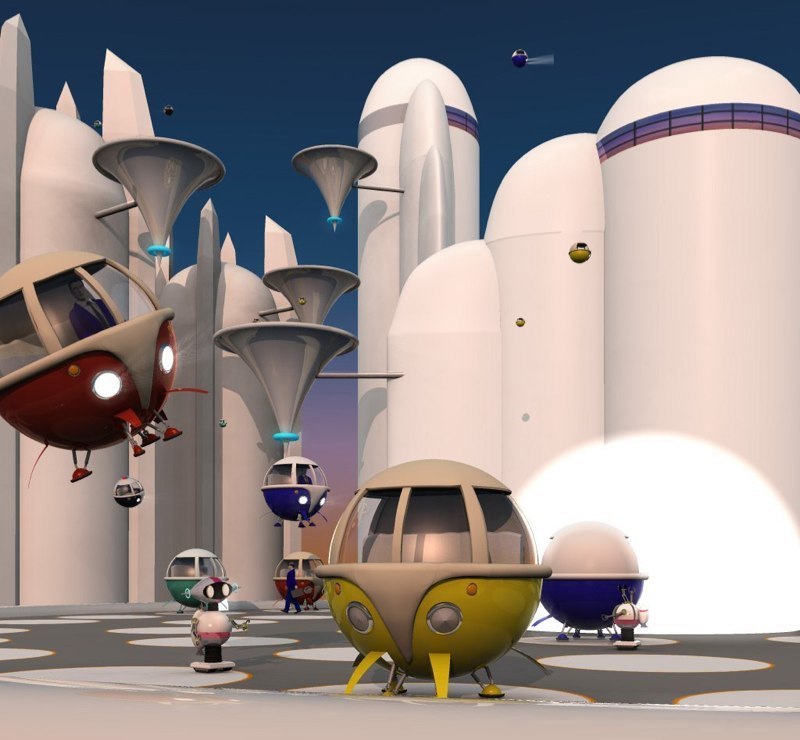
Six years go I did this:

Utopia

Which was inspired by this:


UX Design- I Hate Web Forms (and forms in general)

Hello, it’s 2012, and I’m still filling out forms on the web, which is pretty much the same way it’s been since the web was invented, or at least started to catch on back in 1996-ish. Why are filling out forms on the web pretty much the same experience, i.e. BORING, as filling out forms on actual paper?

Recently, as in a couple days ago, I did my taxes using TurboTax. Now, I hate doing taxes, but actually loved the overall user experience of doing my taxes with it. Why? Doing taxes requires lots of forms. Complicated forms nonetheless. But TurboTax makes the experience of filling out forms actually enjoyable.

Back in 1996, when the web was on it’s way, interactive multimedia on CD-ROM was still king, and I worked for a company who produced CD-ROM’s for different industries, including hospitality. One of the projects we worked on included an RFQ form, that was to be filled out, printed and then faxed. Instead of the standard on-screen form with all the text fields and check boxes, we designed it to be interactive. We set it up so alll a user had to do was answer some questions, and then hit submit.

A finished, nicely formatted form was then produced so the user could print it and fax it- back then we didn’t have the abiltity to upload the form since FTP was pretty archaic and not what one would call user friendly by any stretch of the imagination. Still, the overall experience of filling out a form was better than it still is today in most cases.

Recently, as in a few months ago, I had the opportunity to interview with Disney’s Parks and Resorts Online group. During my interviews, they told me about a cool project that was done and now live, where there was the idea to get people to fill out an online form before going on a Disney cruise. Travelers could fill out the forms at the cruise terminal by hand, but by doing it online, they could save a lot of time.

So, to entice users to do the form online, they worked with the animation department to produce a short online video that harkens back to the old Goofy sports movies (it is Disney afterall), with Goofy giving examples of the advantages more or less of filling out the forms before heading off on vacation.

That to me was clever and overall a great idea. But some things stuck with me afterwards in regards to this and the overall user experience. Again, this is Disney, known world-wide for animation and Imagineering. Also, they are world class when it comes to the overall experience of their customers with the parks, products, films, and the like. So why entice users with a really fun animated piece only to fall short with a web form?

So consider this a freebie to Disney (Jay, Chris, Max), and well, to all the other companies out there who are forcing their users to fill out forms online using the standard tried and true method of filling out endless text boxes. Study and pick apart the TurboTax model of interaction. Doing taxes is serious stuff. But Intuit makes it a very pleasant experience.

To me they pretty much nail what an interactive form wizard (it basically is a nicely done wizard, the way a wizard should work – oh and being Disney, the experience is all about making things magical for their users…) should be. And while you’re making the form interactive, sprinkle in some Disney magic using Goofy, HTML5 and CSS3. Remember CD-ROM’s that had a person or character walk on screen to explain things or direct the user if need be?

What I dig about what Intuit is doing is we were doing this kind of stuff 16 years ago at a little interactive agency in what used to be a carriage house, and to see where it’s gone – although it’s taken a long time for some companies to catch on.

UX Design to me is the ideation, design and follow through in creating the overall EXPERIENCE – nothing should fall short of that. The problem with most things is I would consider them an “Almost there”, you know, like the Death Star trench run, only to have the missles impact on the surface and not hit the target. USE THE FORCE, LUKE.

Or, put another way, really think about what the end-user would want or truly enjoy. BE the end-user. Do you like filling out web forms? Probably not. We’re supposed to be thought leaders, game changers, usability Jedi Knights. We are supposed to make EVERYTHING a great experience.

Random Thought- Mobile Apps and What Frog is Thinking

A buddy of mine posted on LinkedIn today an article from Forbes titled “Apps Are Over; Frog Design’s Scott Jenson wants to overthrow the Desktop Paradigm”. You can read it here: http://tinyurl.com/7sxnfxy.

Most interesting to me is this:

Just in Time Interactions: What Jenson is envisioning is a world where our devices load applications opportunistically as we need them, in real time. The technological model for this, simply enough, is web pages. But these will be web pages with advanced functionality that can be accessed seamlessly from remote or local networks—and even from other mobile devices. He’s thinking about things like bus stops that broadcast the arrival of the next bus, movie posters that beam you a trailer or retail stores that load their app on your device as you walk in the door. “The whole concept of just-in-time interaction is structurally impossible with installed apps,” Jenson concludes.

Why I find that interesting is 13 years ago while working at Stellcom, I had a similar thought and wrote a white paper, WAYYYY before we had real mobile devices, or mobile apps, or the cloud, or 3G.

This is the excerpt from my white paper:

Entertainment and News


This can fall into two categories: The gaming industry and the motion picture/ broadcast industry.

In the gaming industry, streaming video is the perfect companion to creating a unique user experience for hotel and gambling guests (this also could apply to the hospitality industry, covered later).  One example would be through the use of portable hand-held devices (Pocket PC’s would work well in this scenario). In this scenario, a hotel/casino could have stored in a database numerous video clips of featured shows, rooms, dining, etc. When a hotel/casino representative approaches a high roller, various “comped” packages can be created on the fly and then shown to that guest, with each appropriate video clip being streamed to the handheld device in real time. This approach has certain advantages to the hotel/casino operators as well to the guest.

One, the hotel/casino can gather and create new video clips of attractions, rooms, dining, and keep the video clips archived in different groups or categories (family dining, casual dining, formal or romantic dining), keeping costs down in editing and post-production (imagine how many different variables there would be). These clips are then called upon once the hotel/casino representative has created a guest profile

Two, the guest can be instantly made aware of the many opportunities that the hotel/casino is willing to provide, based on his/her needs. This creates a unique user experience for that guest, as well as makes that guest’s experience more enjoyable, due to it being interactively tailored to the guest’s needs and preferences.  In some cases, a guest can be loaned the handheld device during their stay, allowing the guest to see what other attractions are available to them, and tailoring their own user experience.

In the motion picture industry, movie trailers have become commonplace on the web, through the use of streaming technologies such as QuickTime, Real, and the Windows Media formats. This provides the end-user a way to view upcoming films from the comfort of their desktop, whether it’s at home or the office. This technology is even finding it’s way into the presentation of full-length feature films streamed to the desktop computer, both as pay-per-view, as well as free viewings.

Through the use of wireless technology and streaming media, a new door opens to the studios and content creators by being able to provide their trailers to the mobile masses.  In this scenario, one would use their mobile device, whether that is a handheld PC, or a video-enabled  web phone. Through the mobile device, the user would be able to pull up information and listings of movies, times, and local theaters (GPS technology). Finding a movie that the user has heard of, they decide to watch a short trailer of the film on their mobile device. If they like what they see, they can even purchase their tickets for a desired showtime.

Keep in mind that this was written back in 1999, and any devices we thought of or dreamt of were handheld PC’s and or video-enabled web phones — years ahead of the iPod or iPhone.

The similarity to this and what Frog is thinking, what they call “Just in Time” is basically the same as the push technology (even though I focused more on video) when a user was within a certain location in order to get content that was tailored for where they were at.

In other words, this is really nothing new. Or I’m able to predict the future. Or I’m some crazy genius…

Blogging and The Job Hunt

Hello to all of you who read my blog. To be honest, I really don’t know how many people read this, or if anyone actually reads my blog anyway.

Most blogs get a new post everyday- or every other day, or often enough to make it interesting to come to — at least until people read the newest posting by a blogger, and then, well, they move on. I don’t post often, even when I have plenty of time to do so (because I’m currently out of work — a prerequisite for multiple blog postings unless of course that’s one’s own job). I like to blog though when I have some really good or hopefully great idea. Something to share. Something that’s not ramblings or musings because I have nothing better to do than type out really random stuff.

Like the paragraph above. And on a more random note, I love using my iPhone and the WordPress app to blog, but only for short things, and this might take a while.

More to the point, this is about my current experience in job hunting, and where it is so far. I didn’t want to really have to go job hunting. I don’t think anyone does unless they really hate their current job, or boss, or co-workers. I liked where I was, what I was doing, my new boss, and my co-workers. Then the company decided to do a huge, pretty random layoff. That was on January 17th, and 300 people were let go. The company said it was due to us not meeting their standards. Our reviews the weeks before said we did, and even exceeded standards and expectations in some cases.

I don’t think people like looking for jobs because of the pressure, the interviews, the competing and not knowing where you stand during the selection process, getting turned down for what seemed like the perfect fit, and so on. Add in that there are things to deal with when being let go when you thought everything was just peachy, such as the shock of being let go (without any real warning), depression, anger – and then trying to pull it together for interviews.

So, for me, I experienced those and I don’t mind being honest because we all deal with those emotions. But I had (and still have) one glimmer of hope, which happened before being let go. The one company I dreamt of working for reached out to me, at 11:30 pm via email, exactly one week before the last day I’d be a UX designer for my employer. Imagine having tried numerous times during your adult career life to get a job with the one company you had seen yourself working for one day since childhood, then finally giving up hope that it would ever happen and letting that dream die, and a few weeks later they reach out to you.

A few days before being let go I was contacted by more recruiters, as well as even more after being let go. I told them the company I had dreamt of working for was interested in me , and they still are as far as I know. They haven’t called or emailed to say I’m no longer being considered, and my last call was that after a bunch of interviews that they want me on the team. Now it’s just a case of waiting to meet with the VP to see what job he’s considering me for, since it turns out there was more than one opening.

From what I’ve heard and understand, this company can take a while to getting things like this done. It’s been almost 2 months since I started interviewing with them. I remember when I was at Northrop Grumman that we lost a lot of good candidates because it took management too long to make a decision, and thus they had to start all over again.  The thing is I’m willing to wait, because this is my dream job. But as more recruiters call and make offers, good offers, I don’t know how much longer I can wait. Unemployment doesn’t pay much, and we’re on one income with my wife working, so things are getting tight.

So, if you happen to be the recruiter for the company of my dreams, or know her, can you let her know how badly I want this job, and more important, I can’t hold out much longer? I have a family to support and they’re all behind me on working for you. Please don’t let this dream die again.


Why Filmmakers Make Great UX Designers – An Opinion

I remember sitting in the cube of a manager at HP, as I was hired to originally make Flash prototypes of some new printer apps. As soon as I was hired (on contract), they asked me to do interaction design instead. So, weeks later, I find myself at the desk of the manager of the overall team. His question- ‘What is a user experience designer?’

I gave him an answer I thought was close enough. He pondered, then said something like “Yeah…but no on really knows what it is, and wherever you end up working, that company will think it’s something else.”

Okay, so I pondered that for a long time, and for the most part it’s true. UX, IX, Industrial Designers, information architects etc., all have something to do with user experience design. UX designers for the most part go to school to study human computer interaction (HCI), or Psychology, or end up spending $5k to take some classes for a week, take a test, and then end up with a piece of paper saying they’re a UX designer.

Then there are the people who never took classes, or spent $5k for a certificate. They just are almost naturally. And interestingly enough, there’s the off-chance that they have some background in filmmaking. Okay, so I happen to have been and still am at heart, a filmmaker. So I’m going to correlate  how closely UX design and filmmaking are almost the same thing. This is my opinion, which pretty means nothing. And you can argue points in this if you wish, tell me I’m wrong, or agree with me.

I’m not going to go all out on this, and will be somewhat brief, so bear with me and try to have an open mind. I’ll list something in UX terms, and then relate after how filmmaking is pretty much the same. Here we go…

UX Design Practice 1. Ethnographic Research

Ethnographic research in the terms of UX design simply put is studying a group of people, who are of some ethnic background, for months. You learn about them, interview them, spend time with them, get to know them well enough that you can make an informed study and thesis on them so when you go back to design something, it fits in with who the target users are. You understand them enough that you can now make a case study on that group and how to make your product work best for that group.

Filmmaking Version: 

As a storyteller or even documentary filmmaker, you spend months or even years interviewing, filming and learning about your subjects. You become part of them and considered to be one of them as you eat with them, share, and learn all you can so when you go back to edit your film, it best represents those people or group.


User Experience Practice 2: Creating Personas

Creating personas is the art of creating a fictitious person or character, including gender, general age, hobbies or interests and so on that would be the type of person who would use your app, or website, or product. Who they are, what they typically like to do, what drives them. It gives the illusion of a real live person that would for one reason or another want to use what you are designing.

Filmmaking Version: Character Development

As a storyteller, you create characters (personas) for your story, who they are, general age, gender, what drives them, and so on. You give an insight to them so they have depth when the story is written and then filmed.

User Experience Practice 3: Creating User Scenarios

Creating user scenarios for what you are designing towards is simply creating a story of a person (from a persona most likely), a problem they have, and how that problem gets solved ultimately by the app or website or product you are going to design. Example: Bob is a dad who’s busy all day at work, but needs to get things together for his family vacation with his wife and two kids. They’ve all decided on going on an Adventure by Disney to Europe, but he doesn’t have enough time at the office to make the reservations, his boss keeps piling on more work, and Bob is swamped with meetings and phone calls. So he grabs his smartphone while at lunch, goes to the Disney mobile travel guide, and within minutes he’s chosen the destination and booked the trip with a few clicks. When he gets home, he finds his trip confirmation on his HP web enabled printer at home.

Filmmaking Version: Writing the story

You write a story with a beginning, middle and end, add your protagonist (Bob), a seemingly insurmountable problem, give Bob a way to solve the problem, add some drama or some humor to the dialog, make it seem like he’ll never be able to accomplish his mission, add in an antagonist (his boss), but in the end he does and you wrap it up with a happy ending…or he gets home to find his printer is out of ink, added with the “…to be continued” tagline.

These are only a few examples of how user experience design is very similar to filmmaking.  If you have some, please share them. I’d go on, but I think I’ve given enough examples for now.

Greg

Miscellaneous Thought — What does “Best in Class” mean (and how do you get there)?

Many companies either think their organization is “Best in Class”, or want to become “Best in Class” for their given field or market they’ve chosen to be in. That is a very fine goal for anyone or any company. But how do they get there, whether it’s an individual or a whole organization?

For an individual, I think, it’s looking at what others have done in the areas of interest where one wants to do better, grow and ultimately succeed,  and how they succeeded, where their accomplishments were, or where they failed miserably and learned from it, refined themselves and then eventually became something to model one’s self after. Along the way, to become a best in class employee, we make mistakes, learn, improve, and go on to do great things – eventually.

It takes time, patience and humility to become a best in class employee. You have to know your faults, except them, and learn how to overcome them in order to grow as a person in general, and eventually helps you become the model employee all companies seek.  EVERYONE, I believe, has the potential to be a best in class employee. The problem is sometimes people are too lazy, feel unappreciated, and lack direction to get there.

So we have that established. Of course there’s more I can add, but let’s move on to how a company (in my opinion) can become “Best in Class”.

A company that wants to be in that category needs to hire talent (of course), what they deem, to quote Zeb from “Men in Black” – “We need the best of the best of the best.” So the recruiters scan the interweb to find potential talent to help them become best in class. And when they go through all the process of interviews, recommendations and references, they hire someone.   So far so good.

But what happens after that seems to get lost to become a best in class organization. Think of it this way. If you’re going to make a really good soup, you look for a good recipe, and it helps to know how to cook.  You may watch what other top chefs or cooks are doing that are great at making soup, so you can get to where they are and to learn from their mistakes and successes.

You need good, fresh ingredients (employees/talent). You then need a really good recipe that tells you how to put it all together and how much of each ingredient is needed, and when to put it in (direction). You then need time to let it simmer so all the ingredients can combine to make an outstanding soup. If something seems to be missing, you add some extra ingredients to make it more flavorful and robust.

You don’t suddenly pull things out of it or dump the whole thing down the drain when you’re almost there. With time and patience it becomes a great soup.

So, any company can become a best in class organization. But they need to see what others are doing and what they’ve done to get there. Best in Class though starts at the top (the chef), and then filters down to management (assistant chefs) so they can then guide and direct their employees (the ingredients) so they can be best in class themselves. Without good leadership and direction that goes throughout the company, then things fall apart.

You can’t hire great talent, sit them at a desk, and say “get to work” without giving them good goals to achieve. Everyone needs good solid goals and needs to know what’s expected of them. More importantly, they need to be given the means through assignments, direction and leadership to achieve those goals. Without them, they become a great ingredient that becomes stale because they’re not being used to their full potential.

So, end of year comes, reviews are meeting expectations (or less because of the lack of good leadership), and the company decides to dump a good part of it down the drain. To save face, the chef says “I just had bad ingredients.”  But the real issue is not that those ingredients weren’t great (they had to be since they were hand selected by the chef’s team) – it’s the chef who didn’t have a great recipe and some practical training to be a chef. And to add to that, his assistant chefs never got proper training either.

This leads to some ingredients weren’t put in the pot until the last minute (new hires or people who were never given goals before their review), or stirred (given direction), or time to simmer (time to learn more, grow, take initiative). So when the chef sees his soup isn’t doing so well, he throws it out and tries again by adding more ingredients. But his soup will never be what he wants it to because he lacks a good recipe and training for success.

If the chef had a great recipe and great assistant chefs who are trained in culinary arts, so they could get those ingredients to realize their full potential, then he’d have a best in class soup.

People need great leadership, great direction, clear goals, the means and time to achieve those goals, time to learn more and bring those things back to work to make it a better company, room to grow, opportunities to lead, given chances for initiative and then rewarded for their hard work. Those are things that lead to a best in class organization.

Throwing away the great ingredients because there was no recipe does not.